Service Offerings

Explore tailored services designed to solve business challenges and support growth

Industries

Discover industry-focused expertise built to meet unique business needs

Partners

Meet our service partners who strengthen delivery and support client success

Meet our service partners who enhance our capabilities, strengthen service delivery, and help drive successful outcomes for our clients.

Discover how HamiltonJet is exploring secure, practical agentic AI to unlock new opportunities within Infor M3.

Fortude helps a US-based, global leader in metal working fluids drive digital maturity on Infor CloudSuite Chemicals

Discover how a global manufacturer optimized ERP operations, reduced inventory counting time from one week to one day, and built a roadmap for digital transformation.

Products

Explore our digital products built to streamline work and drive growth every day

Partners

Meet our product partners who enhance our solutions and expand client value

Resources

Access blogs, case studies, events, and insights that support smarter decisions.

Latest Resources

BLOG

Order capture agent as a control point: Using AI to improve upstream order quality

CASE STUDY

Fortude drives multi-site cloud migration for The Compleat Food Group across the UK

Our People

Discover a culture where you can grow and shape what’s next

Everyone can grow at Fortude

We believe in creating a global workplace where everyone can grow. This is amplified by our teams, who say the best thing about Fortude is our culture, one that is brought to life by a diverse team that spans across continents.

Latest

Fortude builds momentum for women in tech with all-female Ignite 2.0 tech internship

Aug 22, 2025

Pioneering innovation and inculcating learning in the age of AI

Aug 01, 2024

About Us

Learn who we are, what we do, and the values that drive our growth

News & Events

Stay updated with Fortude news, events, stories, and company highlights.

Contact Us

Get in touch with our team to ask questions or start a conversation

Your nearest office- Sri Lanka

Fortude (Pvt) Ltd
146 Kynsey Road, Colombo 7, Sri Lanka

Email – talk-to-us@fortude.co
Phone – +94 11 453 1531

What defines us goes beyond what we do

Every day, we bring together diverse perspectives, strong leadership and responsible thinking to build a business that creates lasting value for our clients, people and communities.

Fortude disrupts ERP delivery with agentic AI across the Infor CloudSuite lifecycle
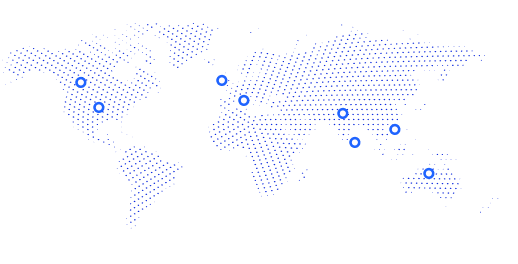
Office locations

Agentic AI solutions

How agentic AI is changing fashion merchandising

9 min read

October 23, 2026

Share

Fashion merchandising has always been a bet placed early. Buyers commit to styles, sizes, and quantities months before a season starts, but actual demand rarely follows the plan. A size sells out in one store while the same size sits untouched in another. By the time anyone notices, the stock is heading for markdown. 

Retailers have invested heavily in automation and analytics to close that gap, but the results have been uneven. A McKinsey survey has shown that 71% of retailers said AI merchandising tools had so far had limited to no effect on their business, and 61% said their organization was not at all, or only slightly, prepared to scale AI across merchandising. Merchants also reported spending around 40% of their time on low-value work, such as reconciling data across siloed systems and building spreadsheets for performance reporting. 

Agentic AI is starting to change that picture. This blog looks at what makes it different from earlier tools, what it means for merchandising teams, and how we applied it to a stock imbalance problem for a US apparel brand.

Why earlier tools fell short

Deloitte’s research on collaborative automation draws a clear contrast with earlier tools. Robotic process automation handles structured, rule-based tasks well, but struggles with ambiguity and changing conditions. Analytical AI forecasts demand, but its output is usually a static report that someone has to validate, interpret, and act on. Generative AI can summarize and recommend, but it struggles with the messy commercial data that fashion runs on: conflicting SKU files, parent and child product structures, and inconsistent pricing history. The challenge is that these tools may not work with sufficiently current, connected data, creating problems in a fast-moving industry where demand and stock availability can change quickly. 

The outcome is a merchandising team that spends the week reporting on the past instead of shaping the next season. Stock imbalances and other performance issues are identified late and addressed reactively.

What agentic AI does differently

Agentic AI systems are goal-driven – they plan, act, and learn from outcomes rather than waiting for a person to ask the next question.   

McKinsey’s analysis of retail merchandising shows what that means for merchants. First, agents handle messy data better, cleansing and reconciling information themselves and improving with each cycle. Second, they can run and test scenarios at scale, in natural language, and explain their reasoning. Third, agents across functions can work together, connecting decisions from the vendor through to the store shelf. Deloitte sees this multi-agent collaboration as the next wave, with agents assigning tasks to one another and checking each other’s output. 

The potential payoff is time. McKinsey estimates that merchants could reclaim their time by handing repetitive work to agents, and redirect it to strategy, product selection, customer understanding and vendor negotiation. Deloitte adds a useful caution: agents are not a reason to discard what already works. The strongest results come from pairing them with existing automation and applying them where judgment is needed. 

For fashion brands, that raises the bar on the fundamentals. Whether an agent is supporting product selection, stock allocation or replenishment, accurate product data and reliable stock availability are essential to sound merchandising decisions. 

Putting it into practice: leveling inventory across retail stores

Inventory is where merchandising decisions meet reality, which makes it a practical place to start. Here is how we approached it for a US apparel brand: 

The problem – As noted in the introduction, the retailer, like most apparel brands, decides how much stock to allocate to each store at buying time, months in advance. Once the season starts, actual demand diverges from the plan. A size sells out in one store while the same SKU sits on the shelf in another. Because these imbalances weren’t identified during the season, they surfaced later as markdowns or returns to vendors, putting margins under pressure. 

What we built – Our inventory leveling agent has three parts. The first is a two-stage machine learning forecast, trained on about 30 months of sales history alongside weather, public holidays and the promotions calendar, which estimates demand for each SKU at each store. The second is a transparent planner that identifies stores with stock shortages, stores holding surplus inventory, and potential donor stores that can help meet demand. The third is a conversational agent that lets planners ask questions in plain English, such as which stores are likely to run out of stock this week. 

Each weekly run produces three outputs for three teams. Transfers go to store operations to ship. Exceptions, where nobody holds the stock, go to buying to reorder. Excess stock that nobody wants goes to merchandising for a markdown decision. 

Where the AI stops, by design – The model forecasts demand, but it does not make the final inventory allocation decisions. Which stock moves, how much moves, and where it moves from are determined by transparent rules that a planner can check manually. Each threshold can be adjusted if the planner disagrees with the recommendation. 

Here’s an instance in which we saw this agent in action: A store had run out of a popular shirt in size L and had been selling it steadily. A store 20 miles away held six units and had sold two in 12 weeks, so the agent recommends moving four across. It passed over a closer store, because that store sells the same shirt five times faster and needs its own stock. 

Checking the recommendations – We tested the recommendations against 12 weeks of the brand’s real sales history. In 91% of recommended transfers, stock was moved to a store selling that SKU faster. The figure is not 100% by design, because a slower store sometimes needs topping up when it has run out entirely. In 40% of cases, the donor store had sold none of that SKU in 12 weeks, so dormant stock was being moved to where it sells.  

What the project taught us

Three lessons apply well beyond one brand. 

Scope matters: The customer sharpened ours. Moving stock between sales channels was off limits, because each channel has its own leadership and numbers. The real opportunity was rebalancing between stores in season. Agents work best on clearly bounded decisions. 

Data takes as much work as the model: Parent SKUs, written-off transfers, and gross-only sales all need careful handling. Without it, the agent would have produced recommendations that looked right but were not. This echoes McKinsey’s findings that messy data is a major reason AI tools underdeliver. 

Trust comes from explainability: When planners first saw numbers without reasons, they asked why they should believe them. Adding a short rationale to every recommendation changed that conversation. 

Where to start 

For fashion brands weighing their options, a few principles follow. Start with one costly, frequent and measurable merchandising decision, such as stock allocation across stores. Make sure the underlying data is reliable before building. Let AI estimate demand and explain its recommendations, while keeping the rules governing inventory decisions visible to planners. Validate recommendations against historical data, then track the results when they are acted on. As merchandising teams move from producing reports to directing agents, plan for that shift and how they work, too. 

To explore how agentic AI could support your merchandising and inventory management decisions, talk to our consultants. 

FAQs

What areas of merchandising can agentic AI be used in?

Agentic AI can support much of the merchandising cycle. That includes demand forecasting, assortment planning, allocation and replenishment, pricing and markdown decisions, vendor management and performance reporting. It works best where decisions are frequent, data-heavy and measurable. Inventory allocation is a strong starting point, because stock imbalances between stores are costly and easy to track.

Better stock positioning improves what happens upstream and downstream. When stock sits where it sells, buyers get cleaner sell-through signals for reorders, store operations ship shorter and more purposeful transfers, and merchandising faces fewer markdowns. In our example, favoring the nearest donor store cut the median transfer distance from 1,024 miles to 208, and exceptions flowed straight to buying.

Yes, and it is often the strongest approach. Rules-based automation handles stable, structured tasks reliably and cheaply, while agents add value where data is messy or judgment is needed. In our leveling agent, machine learning forecasts demand, simple visible rules decide the moves, and a conversational agent answers planner questions. Planners can check every threshold and change it, so people stay in control. 

Start by checking recommendations against historical sales, as we did, then agree on a set of actioned decisions with your planners and track the outcomes. Useful measures include sell-through, stockouts, markdown rates and transfer costs. Be clear on what is proven: agreement with past sales shows the logic is sound, but only real results show business impact. 

CONTENTS

Receive the latest
Fortude Newsletter
updates.

Share

Related Blogs