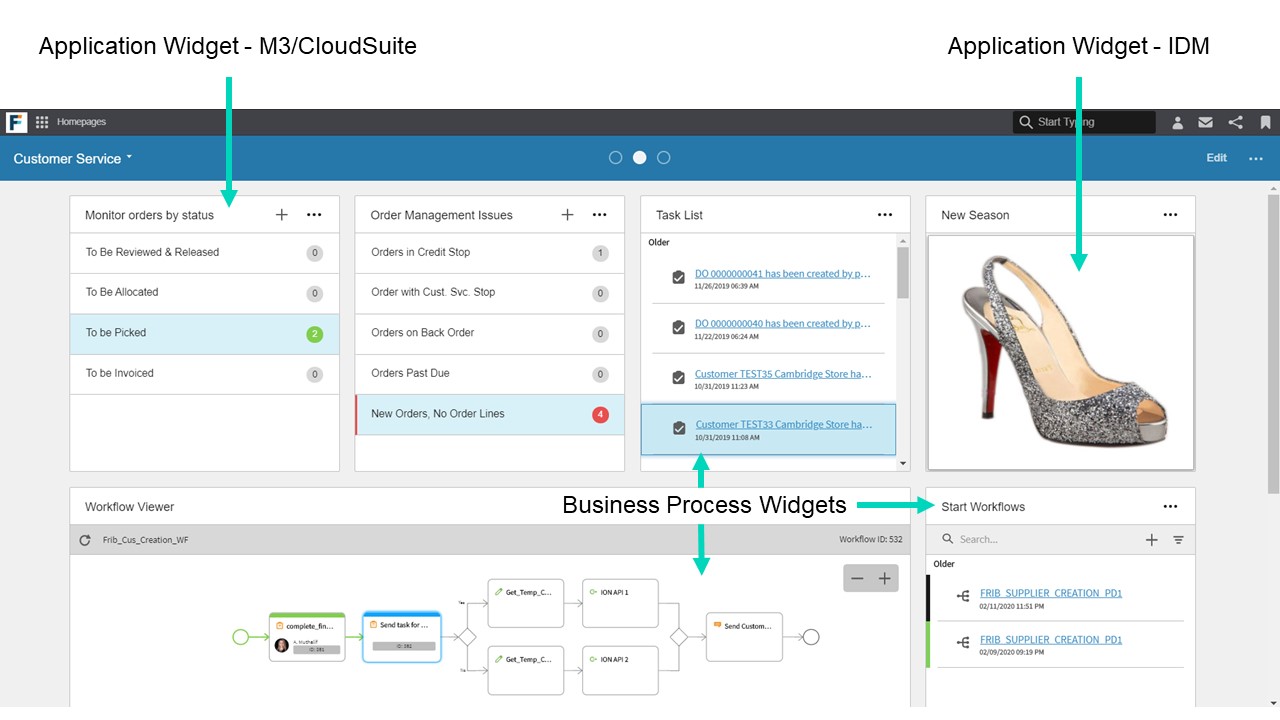
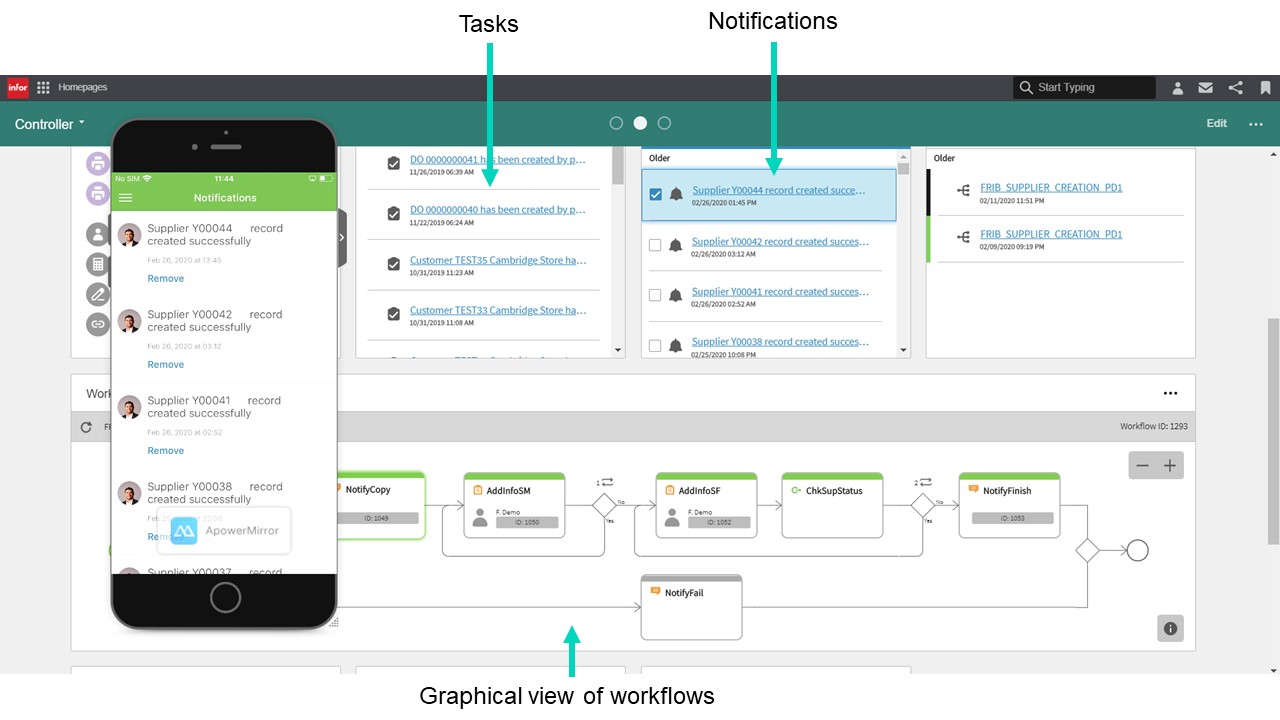
The 4th problem is closely related to problem 3. ERPs are accessed by many user groups such as merchandisers, finance personnel, sales executives, and analysts. If your ERP has a static interface, it may be contributing to a poor ERP user experience, as a single interface cannot serve different user groups.
Figure 2: Ming.le Widgets
Ming.le Homepages can be personalized to serve a specific user group, allowing them to see the information that is only relevant to their function. What if you are the CIO of the company and do not fit into any of these user groups? For unique business users, homepages can be further personalized so that it shows the key performance indicators (KPIs), metrics, insights, exceptions that need attention, and any other information that the unique user wants to have at their fingertips.
Users can browse existing homepages through the Page Catalog, through which users can view recently created or updated and recently used pages. Ming.le also has a Widget Catalog, which is a library of prebuilt, single-purpose applications facilitating small tasks. When designing homepages, you can add widgets from the Widget Catalog.
For decision makers, Ming.le Homepages offers another benefit—the ability to embed Infor Birst dashboards. Birst is Infor’s business intelligence (BI) and business analytics platform.

Figure 3: Infor Birst business intelligence dashboard on Infor Ming.le
As the embedded Birst dashboard loads on the homepage, decision makers can make quick decisions. Birst dashboards can be drilled down for more information, allowing users to see information in detail.
Part 1: Four reasons why Infor ION can make your enterprise application experience better
Part 2: Seamless business document management with Infor Document Management (IDM)