An analytics solution is no longer an option, but a necessity. While your Infor ERP manages and integrates end-to-end business processes and promotes efficiency across your supply chain, a unified analytics solution will function as a central repository for all your data by building a strong data pipeline that draws from various sources; including but not limited to your ERP. Your company probably would also be tapping into further vital systems including CRMs, other enterprise systems, and cloud sources to derive insights. A unified data solution will distill all of this unstructured and structured data into a single source of truth, consolidate, combine and contextualize the numerous data points into clear, actionable insights. Thus, your Infor M3/CloudSuite solution is complemented by data from other systems and sources, helping you translate your data into business value. Businesses that fail to leverage the full benefits of their ERP investment with a unified analytics strategy, risk leaving serious value on the table and missing out on growth opportunities.
While most leaders will agree that businesses need to be rooted in data analytics, the reality is that many struggle to realize the full potential of their ERP investments. But, even the most pervasive analytics challenges are not without solutions.
- From data silos created by disparate systems and time-consuming manual effort required to create a consolidated view…
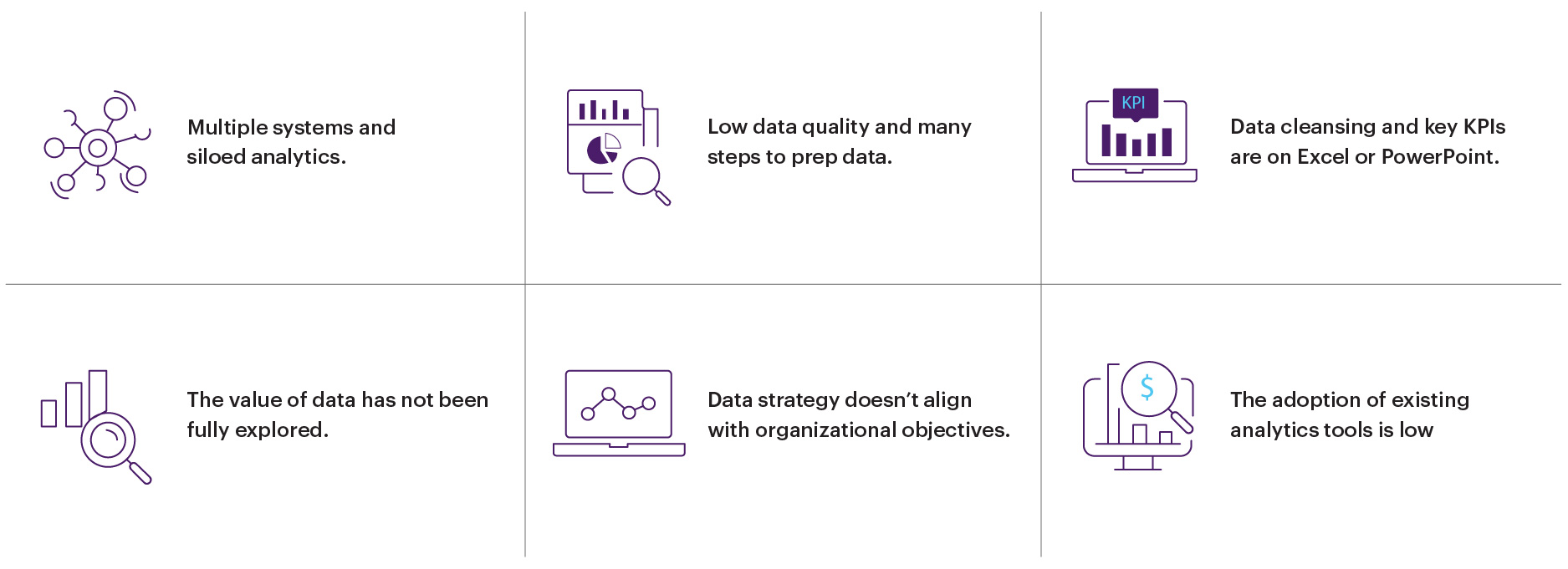
Businesses often operate on multiple systems, producing multiple sources of data. When these disparate systems fail to speak to each other, data silos form. In a siloed system, data that is produced in one department/application cannot be accessed by users of another application so you would have to create exhausting, manual workarounds to access crucial insights.
…to a unified data model that bridges the gap caused by siloed data
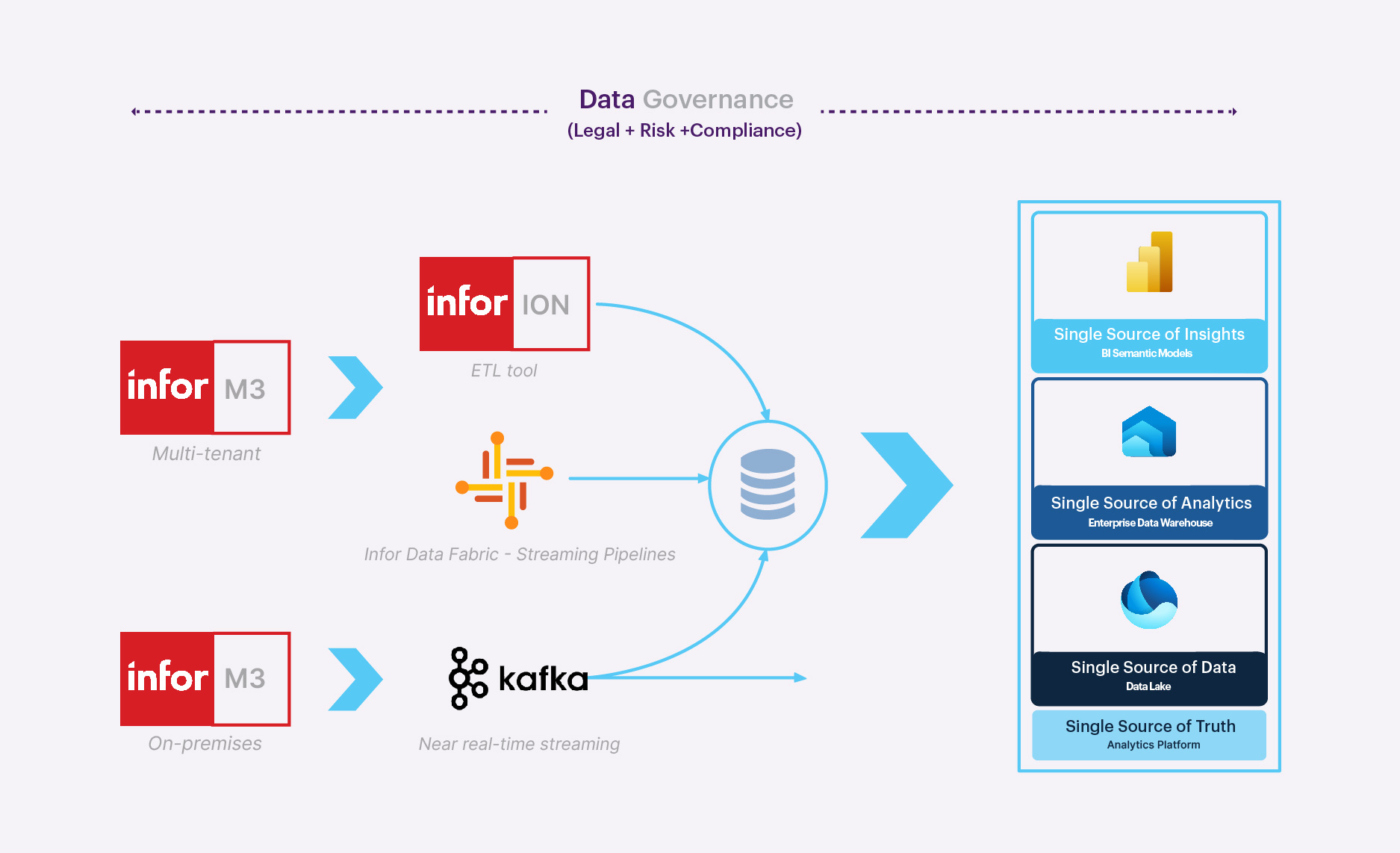
A unified data model integrates disparate data sources like ERP systems, CRM systems, and other data sources and consolidates them into a unified data platform. Therefore, cloud-based and on-premises data sources can be unified and accessed by different ERP systems, tools and applications, and users across various business functions or departments. For an organization that is on Cloudsuite, this would work via Infor Intelligent Open Network (ION) middleware’s ETL tool or Infor Data Fabric’s stream pipelines which collects and delivers the data to a generic data lake, data warehouse, or database. For an organization that uses Infor M3 on-premises, data can be streamed in near-real-time through Kafka or batch loads through technologies like Java Database Connectivity (JDBC).