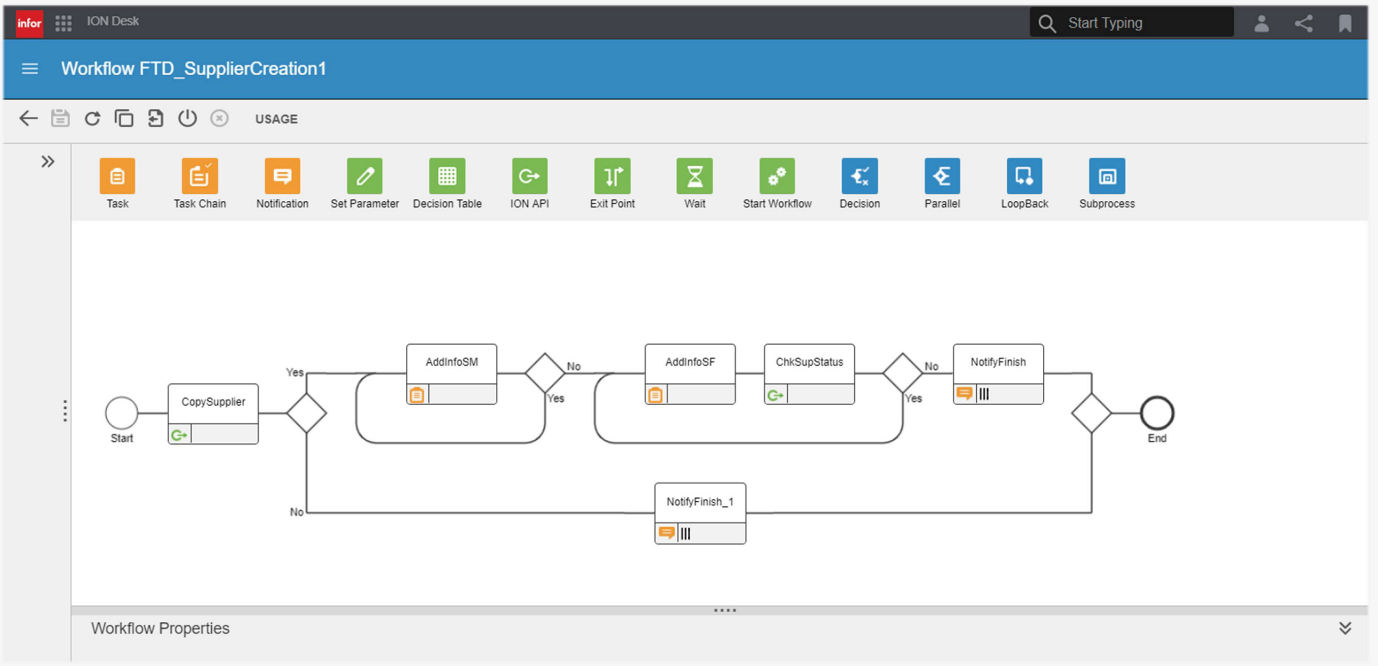
Figure 3: ION Desk workflow interface
Most ERPs focus on an enterprise and the functions within it. As social media gained popularity, ERPs were enhanced to include collaborative platforms that allow for easy communication, data sharing, and workflow management across various departments within an enterprise. Infor Ming.le is such a platform. It allows users across the organization to chat, share documents, assign tasks, and so on. Instead of generating copious reports that are sent from one department to another, cross-departmental workflows can be set up with notifications and alerts in place.
But still, more is needed! Not everyone works within the same organization. We need inter-enterprise communication and collaboration for brands, customers, suppliers, manufacturers, shareholders. Everybody who touches a part of the complicated fashion supply chain may need to communicate and collaborate with another part of that same supply chain.

Source: Infor | Optimize your supply chain network with Infor Nexus
Networking platforms, such as Infor Nexus, provide such functionality. Brands can log in directly to approved modules of a manufacturer’s ERP system and provide updates on order dates and quantities. As the data is now in the ERP, it can trigger the notifications and alerts mentioned above within the organization. Huzzah!